
By Sarah Clark
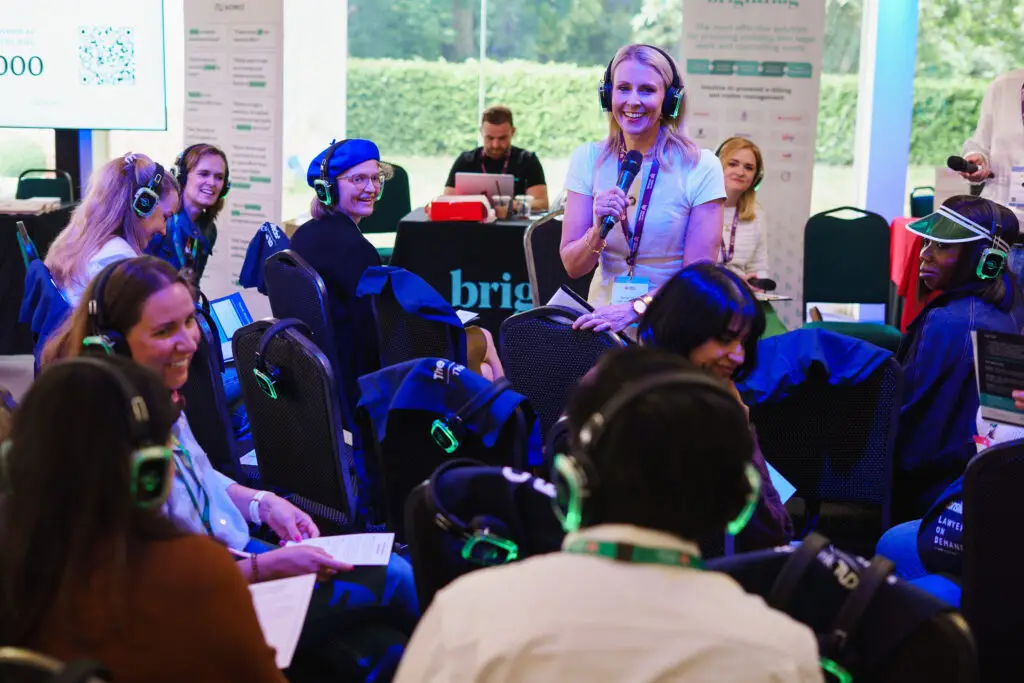
Last week at CraftyFest, we did something a bit different. Instead of another panel discussion about the future of in-house legal, we threw 40+ lawyers into the deep end of an entirely fictitious but very realistic business crisis and asked them to leave their legal hats at the door.
The result? One of the most eye-opening sessions I’ve facilitated in years.
Why we ditched the traditional format
At TLD, our Client Legal Directors often tell us that their most valuable moments aren’t when they’re centre stage solving purely legal problems. They’re the moments when they’re embedded in the business, working across functions, helping shape outcomes when the stakes are highest and the pressure is on.
That’s exactly the experience we wanted to recreate. So, we designed “Who’s Wearing the Risk?” as a full immersion crisis simulation, complete with props, role cards, and silent disco headphones for live commentary.
The setup was simple but effective: lawyers stepped into the shoes of CFOs, procurement heads, compliance officers, and marketing directors at a fictional plant-based food company called Bonnet & Bean. What started as a Sunday newspaper exposé quickly spiralled into a full-blown reputational and commercial crisis.
The power of perspective
Watching seasoned legal professionals grapple with budget forecasts, supply chain contingencies, and influencer partnerships was fascinating. Suddenly, questions weren’t about legal liability or regulatory compliance. They were about investor calls, warehouse contracts, and brand messaging.
The feedback during our debrief was particularly revealing. Participants who took on the CFO role spoke about gaining new appreciation for the financial pressures their colleagues face, while those playing marketing roles better understood the tension between needing immediate answers and requiring time for proper legal analysis.
The beauty of the simulation was watching the natural tensions emerge between functions. Our fictional procurement team and compliance team started pointing fingers, just as they might in real life. Marketing was demanding immediate answers for external stakeholders while compliance was still gathering facts. The CFO wanted decisive action while procurement was managing complex supplier relationships.
The GC as strategic partner
Throughout the chaos, our Client Legal Director Rachel Webb Wiles played herself, demonstrating how a strategic GC navigates cross-functional tensions while keeping the bigger picture in view. She didn’t swoop in with legal solutions. Instead, she asked questions, facilitated conversations, and helped each function understand what the others needed.
During our live crisis meeting, it became clear how different each role’s priorities were. The CFO needed a narrative for investors. Marketing needed to know what they could and couldn’t say publicly. Procurement was focused on immediate supply chain alternatives. Compliance was preparing for regulatory scrutiny.
Rachel’s role was to help them see the connections between these priorities and work towards solutions that served the business as a whole, not just individual functions.
What surprised us
The themes that emerged from our discussions were telling. As one participant put it: “It really made me think differently.” Another reflected: “It’s made me recognise the pressure my colleagues are under, and how that’s different to mine.” These responses captured exactly what we hoped to achieve. Participants shared how stepping into different roles helped them understand the unique pressures each function faces during a crisis, from managing investor expectations to handling immediate supply chain disruptions. Many reflected on how this would change their approach to cross-functional collaboration.
The real-world application
This kind of perspective-shifting isn’t just useful for workshops. It’s essential for GCs who want to be truly strategic partners in their organisations.
The most effective GCs we work with don’t just understand the legal implications of business decisions. They understand the commercial pressures, operational constraints, and stakeholder dynamics that shape how those decisions get made.
They show up to crisis meetings not just with legal analysis, but with genuine curiosity about what each function needs to succeed. They ask questions that help the room think more clearly, not just more legally.
Looking forward
The response to our CraftyFest session has been so positive. There’s something powerful about stepping outside your usual role and seeing the business through different eyes.
For in-house lawyers, this kind of perspective is becoming increasingly valuable. As legal teams are asked to be more commercial, more strategic, and more embedded in business operations, understanding what your colleagues actually need from you isn’t just helpful, it’s essential.
The best GCs aren’t just legal experts. They’re business leaders who happen to specialise in legal matters. And sometimes, the best way to develop that business leadership is to put down your legal hat and pick up someone else’s for a while.
If you’re interested in running a version of “Who’s Wearing the Risk?” inside your organisation or want a copy of our facilitation guide, email enquiries@thelegaldirector.co.uk.

